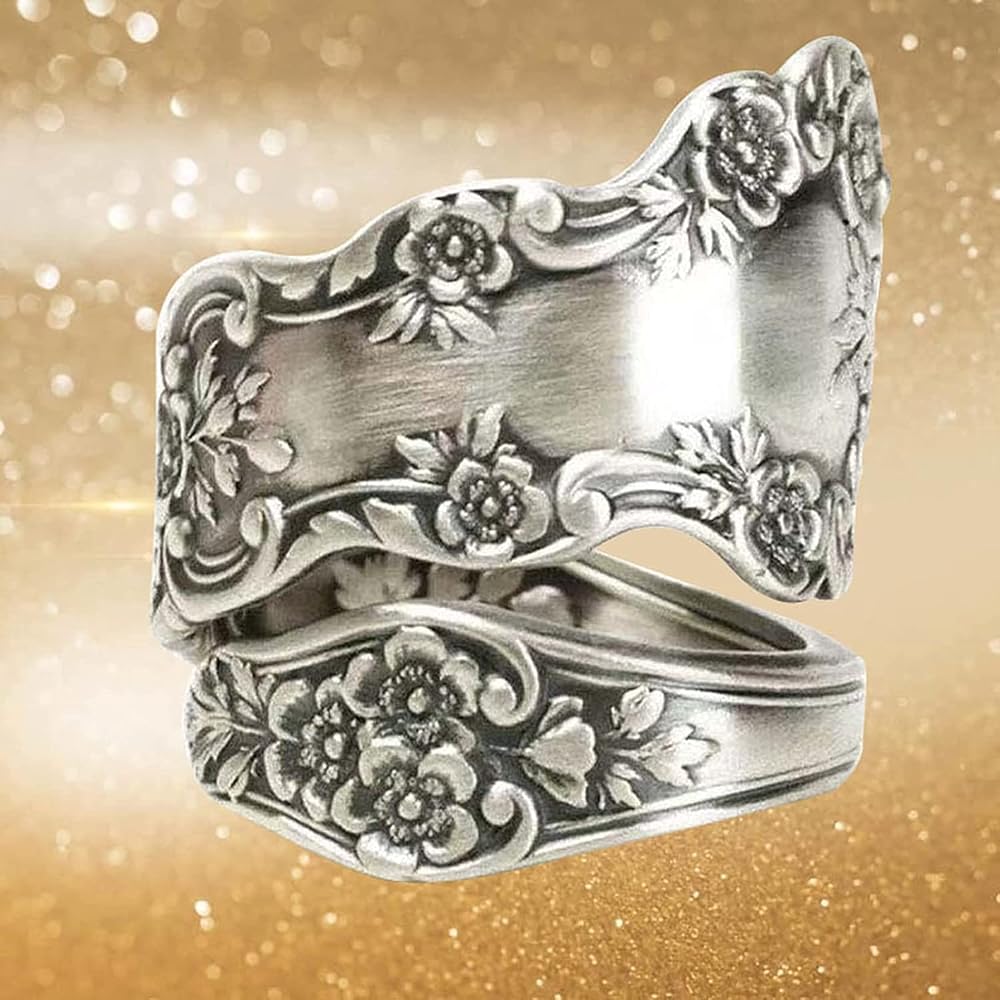
Spoon rings have a long story in History, for its craftsmanship, materials used, sustainability, and thru the symbolism.
In England and Ireland, during the 17th century the
age where the top of the hierarchy was the nobility and the gentry. While at
the bottom of this pecking order were the servants, laborers, and unskilled
workers. Most people were poverty stricken and relied heavily on parish relief
for food.
Flatware was highly prized during this time, the pieces were
typically solid silver and bore the wealthy families’ crest or initials of who
commissioned, owned and used the pieces. According to legend, the servants and
hired help were rumored to have stolen the silver spoons to have them transformed
into rings to use as an engagement ring. This was a show of not only of their love
and commitment to their loved ones but also to shows a sign of rebellion or a silent
defiance against the strict social and economic class barriers.
Many arrests were made during this period for people charged
with “larceny by a servant” or “stealing a silver spoon”. The criminal records
is the one way that the History of the spoon ring is able to be traced.
It is said that Robin Hood gave his true love Maiden Marian
a silver ring fashioned from a stolen silver spoon. This is not a legend that
is hard to perceive and is purely romantic, as he was known to have stolen from
the rich and gave to the poor.
Resurgence in the 1960’s
During the 1960’s the Hippies brought back the spoon jewelry
in rejection of the middle class, which was controlled by materialism and
repression. In response, they made their own casual lifestyle that did not
include mass produced items. They preferred more of a hand-crafted item to show
their love, honor, respect of Earth and nature.
It is no surprise, that spoon jewelry came back.
Spoon jewelry makers repurpose vintage spoons into unique bracelets, rings, and pendants.
Materials
An authentic spoon ring is made from sterling silver; they
are most often marked with a .925 on the piece. Over time, a variety of materials
have been used. Sterling silver (.925), stainless steel, and silver-plated flatware.
Each spoon jewelry creation tells a story, preserving the history of the utensil while adding a touch of style and individuality to the wearer's ensemble.
Crafters transform spoons into rings, necklaces, bracelets, and earrings using various techniques and tools.